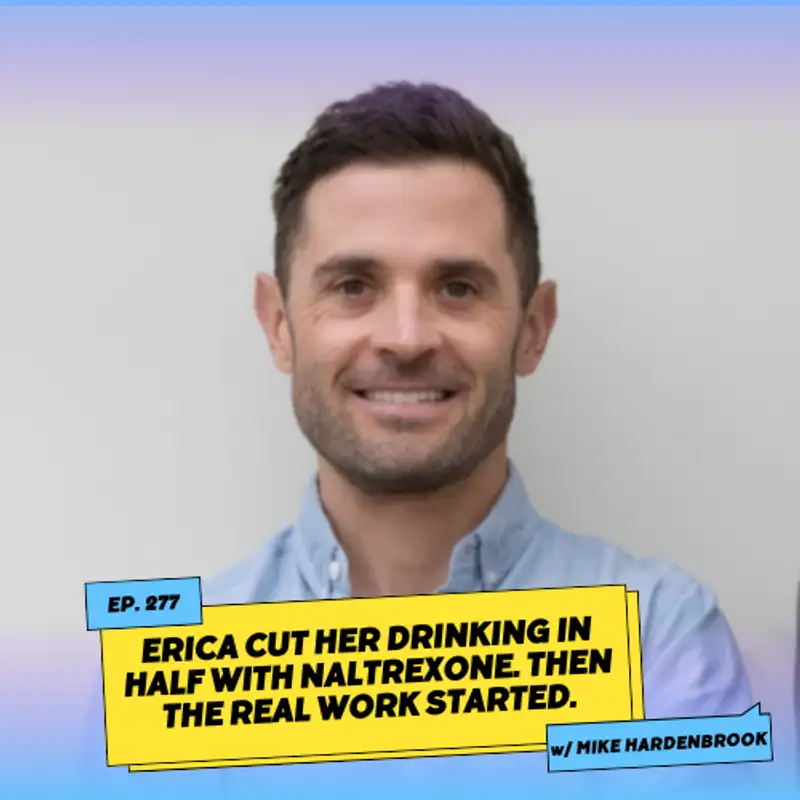
Erica Cut Her Drinking in Half With Naltrexone. Then the Real Work Started.
Today, we have a special guest host, Sunnyside co founder, Ian Anderson. Ian's actually somebody that I work with every day here at Sunnyside, and over the years, he's become a good friend. He cares deeply about the people that we help here, and he's also thought a lot about alcohol and mindful drinking in his own life. Ian recently sat down live in New York with Sunnyside member, Erica Campbell. Within a few weeks of starting Naltrexone through Sunnyside Med, Erica had cut her drinking in half.
Speaker 1:But the change happened so quickly that she had to start figuring out everything underneath her drinking on the fly. Now more than six months in, she talks honestly about what changed, what she's still working through, and what drinking less has made possible in her life. Here's Ian and Erica.
Speaker 2:Today, we're doing something very different on our Journey to the Sunnyside podcast. My name is Ian Anderson. I'm the cofounder of Sunnyside. I have an incredible opportunity to actually meet one of our customers, and now I would say one of my friends, Erica Campbell, in New York City. So we're gonna meet Erica and just learn about her experience with Sunnyside Med, which I think has been, pretty successful so far.
Speaker 2:Would you mind starting by just introducing yourself Yeah. Telling us who you are, what you do for a living, and, where you live, which is in New York City.
Speaker 3:Yeah. Thank you for having me, Ian.
Speaker 2:Of course.
Speaker 3:I'm excited to have this conversation. So I work in the entertainment industry. I'm a journalist and an author. I write mostly about bands, concerts. I go to a lot of festivals.
Speaker 3:There's a lot of late nights out, concerts, venues, interviews, traveling. We can probably dig into that more about that lifestyle and what comes with it, but that's what I do full time. I'm located here in New York City, like you mentioned, which is, again, very vibrant, very exciting place to live. I've been here since 2018. Love it here.
Speaker 3:And, yeah, I found Sunnyside, generally looking for a way to be more mindful about my drinking and to be more thoughtful about how much I was consuming and to consume less. And since then, like you mentioned, it's been really successful. I feel like I've gone through different variations of using it, from just kind of using it as an app to using with Naltrexone. And it's been really impactful on how I live my life and how I drink and think about drinking.
Speaker 2:You told me you grew up in South Carolina.
Speaker 3:Yeah. So I grew up in South Carolina. My family is a military family. So we're stationed in South Carolina. I went to school in Georgia.
Speaker 3:Started working in tech after college. Like, I went to school for PR and marketing.
Speaker 2:Nice.
Speaker 3:Started working in tech and then ended up kind of working in remote spaces, like doing editorial for Patreon, doing editorial for a few other tech companies, and then fell in love with music journalism because I was just writing for free because I was getting into shows by writing. And then the first time somebody was like, we'll pay you to do this. I was like, wait a minute. This is this is what I should be doing. Like, I don't wanna do anything else.
Speaker 3:And then around 2017 was like, I'm just gonna blow up my life, move to New York City, and try to be a music journalist. And it worked out. Not to say there wasn't a lot of work involved, but I think there was a lot of determination in being like, I'm just gonna do something that is exciting and that I'm passionate about and continue to do it until it works. And it has, and that's what I've been doing ever since. But it was an interesting path because in the beginning, was just like somebody not connected to the industry, somebody that didn't really know anybody in New York City, grew up in the South, and have made a new path that's worked out.
Speaker 2:I think the industry that you're in probably doesn't didn't do any favors in terms of sort of drinking habits and things like that. So, if if I may, like, could you explain Yeah. How that added to to things?
Speaker 3:I'm just thinking of so many ways we could go with this because there's so many examples.
Speaker 2:Yeah.
Speaker 3:Like you mentioned, I worked at Patreon, which was in San Francisco. And Oh,
Speaker 2:I didn't realize you were you were in San Francisco.
Speaker 3:I was going back and forth working remotely in Atlanta, but then And I don't I feel like for me during that time, there was less of a drinking sort of culture. But at the first startup I worked at, it was very much like we had alcohol in certain rooms. It was very much like
Speaker 2:The pandemic was
Speaker 3:Yeah. A lot. Yes.
Speaker 2:And I think it changed after the pandemic.
Speaker 3:Yes. Like, we were a happy hour culture. We were a Mario Kart and a drink in hand culture. We were, we're all gonna stay late and work, but we're gonna just open up, you know, the fridge at 5PM culture.
Speaker 2:Honestly, I I think we could spend a whole episode talking about kinda like problematic drinking and start up cultures, but Yeah. That's not necessarily the point of this. But I I I don't know if I had known that about your start up
Speaker 3:Yeah.
Speaker 2:So so.
Speaker 3:And I think that's a part of and maybe I'm just recognizing that because you mentioned it. A part of kind of that beginning almost weird neural connection of like you can work and drink. Like you can drink and work and there's a way to get your work done while drinking that and in your head you're like I would romanticize
Speaker 2:Yes. Like, people would start leaving the office and I'd be like, I have to work late. And if I'm gonna work late, I deserve to have a couple of beers.
Speaker 3:Exactly. Or like a long lunch. Yeah. And I mean, people in the music industry, we do that as well or we have before. And I also think being a a writer, like, there's a lot of romanticizing about, like, you drink and write and then you edit sober.
Speaker 3:Like Mhmm. You know, just like a lot of people that are kind of in the industry in general have romanticized these different levels of just kind of being out of it to be more creative.
Speaker 2:Mhmm.
Speaker 3:So there is that background. But in terms of the music industry itself, I, on a weekly basis, am continually invited to situations and scenarios where there are unlimited drinks. And to the point where I have to tell myself, like, next week there will be another one and there will be another one. Yesterday, I got invited. And I won't mention all the brands because it's gonna start feeling like advertising.
Speaker 3:But, like, last night there was a party in the Lower East Side for an alcohol brand that was doing something with Madonna. And they were like, come and just
Speaker 2:It was an alcohol brand.
Speaker 3:Yes.
Speaker 2:Interesting.
Speaker 3:And what was the ask? Just show up. Just we want, you know, people to come and hang out and have a good time. I'm going to a show tonight, invited by another alcohol brand. Mhmm.
Speaker 3:VIP tickets to see a band I really like with Alice. And they're like, drinks, unlimited drinks, unlimited food, and this is a constant. I've gone to music festivals with alcohol brands. I've gone to the Grammys with alcohol brands, the Video Music Awards. So it's one of those things where even as the music industry shifts, a lot of the people that have the funds to fund your career are brands.
Speaker 2:Yeah.
Speaker 3:And some of those brands that have a lot of money that they can allocate alcohol brands. I think they do a good job of making it fit for what they're doing because they know that people wanna go to a show and they wanna drink. Or, you know, they want to go to a festival and have a drink while they're waiting for artists to come out. So it makes sense, this, like, merging of music and drinking. But if you're embedded in this culture and it's your day in and day out, you are constantly being offered a drink.
Speaker 3:You are constantly being offered a free drink. You are walking into rooms where somebody is handing you immediately. So it's easy to not even realize how much you're drinking Mhmm. Because it's so much it's like a natural part of what you're doing. You're talking to people and you're drinking.
Speaker 3:You're going to a show and you're drinking. Even when there isn't a brand sponsor, people know, like, oh, I know how to get people to come to this event. Well, like, there's an open bar. Yeah. And it's a lot more prevalent, I think, in this industry than any other that I've been a part of.
Speaker 2:Did you ever feel pressure to keep up drinking in specific situations?
Speaker 3:I think, honestly, I would love to think that's what it was.
Speaker 2:Mhmm.
Speaker 3:I think the pressure more so is, when I first got here, I didn't know anybody. There was this inner pressure to just like be comfortable. Yeah. And to be I'm
Speaker 2:100%.
Speaker 3:Funny and to be chill and to be like more relaxed in that anxiety and pushing that down by being like, I'll just have a
Speaker 2:drink. Mhmm.
Speaker 3:And then you're nervous, you're talking to people, you're like, I'll have another drink. And then by that third drink you're like, okay. I'm like more comfortable. I'm more relaxed. But then it's like, when does it stop?
Speaker 3:Because when you're in the beginning of that night, you're thinking, I'm drinking this so that I am more relaxed, so that I am more open to conversation. But by the end of the night, it's like, that's not where it ended. You know, you take it too far. So it's it's I think I definitely when I got to New York City was oftentimes when I wasn't being mindful about my drinking, it was because I was nervous or I was by myself.
Speaker 2:That's like the that's the catalyst. And then you're like, why did I end the night drinking way more than Yes.
Speaker 3:And then the next morning you're like, don't feel great. Yeah. Don't really remember every conversation. I feel anxious. When in reality, the whole point of drinking was to not be anxious.
Speaker 3:And so you're like in this weird cycle. Yeah. Yeah.
Speaker 2:When did you decide that you wanted to make a change to your drinking habits?
Speaker 3:It's been a journey over time because of the fact that it works well with what I do. Yeah. Because because it is there when I go out. Because it's often somebody else offering it, paying for it, being like, hey, this is a part of what we're doing tonight to celebrate something. It wasn't that much of an outer commentary.
Speaker 3:I think what happened was a few things. It was wanting to be healthier. Yeah. It was selfishly just wanting to look better. Yep.
Speaker 3:Which I think is always a driving factor when you're like, I think I would look better if I lost a few pounds and wasn't carrying it.
Speaker 2:For me. I won't dig into my personal story there, but yeah.
Speaker 3:It's a good reason.
Speaker 2:It's a very good reason. Vanity. Vanity.
Speaker 3:Vanity. Wanting to feel bloated. Yeah. And then when you're looking at the actual and I've worked with health coaches before, and there's and I've tried to get around it. It's always like you just gotta cut some of this alcohol for a period of time.
Speaker 3:You're not gonna lose fat. So that was in the back of my head. I also think just relationship, interpersonal relationships and realizing that there were moments where I wasn't drinking for, know, oh, I'm having fun and everybody around me is having fun. It was like, I don't feel good. And I'm drinking to feel better.
Speaker 3:And once it turns into that, and I've started talking to my therapist about that, it was like, okay, let's actually look at this. Let's shine a light of awareness on this. Because That's I never wanted it to become a coping mechanism. Yep. And I think it's a slippery slope from, oh, I'm at a concert, let's have couple of drinks, to being like, oh, I'm upset about something.
Speaker 2:Let's have a drink.
Speaker 3:Let's have a drink And to feel to avoid an emotion or avoid a thought. I think that's where I was like, okay, this is something that I need to be mindful about.
Speaker 2:I don't know if you've heard this before, but there's this typically a ten year gap between when someone recognizes they might need to make changes to their drinking habits and when they actually start doing something.
Speaker 3:Oh, wow.
Speaker 2:Ten years. And so in those ten years, your sort of relationship with alcohol, I would guess for most people, only gets worse. Probably not better. Yeah. Lots of reasons why there's a ten year gap.
Speaker 2:Probably the biggest one is people feel like there's no options to help them that are built specifically for them. I still believe if I walk down the streets of New York right now and and picked a random person and said, what would you do if you had to drink less? They'd say, well, I guess I go to AA, but I don't need to go to AA because I'm not an alcoholic and I don't wanna quit drinking. So we have this extreme dichotomy of you're either okay or you need And to go to what I like about how you're describing this is, habits, which I know a lot of people relate with. And I think recognizing patterns is one of the first and healthiest ways that we start to say, maybe I should start drinking less.
Speaker 2:So so I I give you kudos for, like, thinking ahead. And if anyone's listening and they're having those, like, little thoughts in their head, like, those are the reasons that you should start Yeah. Considering drinking less. So awesome that you did that. And then where did your research start?
Speaker 2:Because, like, when I say that sort of the AA dichotomy Yeah. Does that resonate when you started doing your research? Maybe you can unpack that a little bit.
Speaker 3:Yeah. So I think I'm thinking of a few things. There was and I'm I'm gonna have to look this up. But there was a woman who was a journalist in The UK who wrote a book about being sober curious. And I started kind of Ruby Warrington?
Speaker 3:I think so. I don't wanna say the wrong thing. Yeah. Okay. And I was looking at that because that felt to me, I'm very weary of labels.
Speaker 3:Because I feel like if you start to call yourself something, you become that. And that's worked out for me really well in life where I'm like, I'm a music journalist or, you know, I'm a writer and I take the steps to become that. So the last thing I'm gonna do is give myself a negative label and then kind of live underneath that title. But I also even working with my health coach, even just knowing myself, I was like, I don't know if I wanna live in a world where I can't enjoy a cold glass of Sauvignon Blanc. Like, I just Maybe eventually, but not right now.
Speaker 3:And I think there's a part of me that's like I know that there could be a middle ground. I know that with my eating habits, I never completely cut out anything when I was trying to lose weight. It was like, alright, I can have that every now and then as opposed to having it every day and I could still get results. So it always felt like if that worked for me in this area and it's worked for me in other areas, why don't I just copy and paste and try it in this area? And so I think the first time I saw Sunnyside honestly was through going through TikTok and somebody was talking about it because they were being more mindful about their drinking.
Speaker 3:And at the time, I was doing really well with my eating, but I was like, I think there just needs to be something I need a specific focus on this area because it's not the same thing. Like, I'm dealing with this in a different way. I kind of want a separate way to be like, okay, well, what if my goal is to have two drinks or to just have one drink or to have no drink on that one day? So that felt like something that made sense to me because I'd been tracking my food intake the same way.
Speaker 2:Okay.
Speaker 3:And it made sense to me to have a separate place to track, what I was drinking.
Speaker 2:Can I ask really quick? When you first saw Sunnyside, was it for the app?
Speaker 3:Yes. It was just for the app to track my drinks and I was like, okay, I know my brain works that way, like, from just breaking other habits. I was like, okay, if I can watch if I get some awareness on it and I could start just changing the way I'm thinking about it, that's worked with me in the past.
Speaker 2:So Mhmm.
Speaker 3:That sounded
Speaker 2:And there's there's lots of science behind it.
Speaker 3:Yeah. That sounded great too.
Speaker 2:It's pretty sound.
Speaker 3:Yeah. So I was just like and it it's worked in my life so the science makes sense to me.
Speaker 2:Yep.
Speaker 3:But on the other side of it, I just I wanted something that felt like a good fit for me as opposed to something that felt and I've never been to AA, so I can't say. But something that felt heavy and would be an identifier and would be, like, this big part of my life. I wanted it to be something that felt like it could be added on to who I was and how I was living as opposed to something that felt like I needed to become somebody else.
Speaker 2:Yeah. I mean, you wanted you're you wanted something that can meet you where you were. Mhmm. And where that was was, like, recognizing that you might be drinking too much and wanting to
Speaker 3:Drink less.
Speaker 2:Drink less. I haven't been to AA either, but, you know, I've looked at it a lot. And I believe it would require sobriety to be in compliance as So I believe that would be another reason to that would be sort of it wouldn't really match your goals, Right. On the
Speaker 3:outside. Exactly. Yep. And I I do think what I desire and what I want and how I want my drinking to look doesn't necessarily make sense for everybody. Yep.
Speaker 3:I don't know if it's Like, the options that I'm using that are working for me would work for every single person or their goals. But I do feel like what I've been doing in terms of mindfulness and taking Naltrexone and doing it this way has been working for me at this period of my life in a way that's been really great. So I think that that's kind of where I got in this journey of being like, I don't have to make it work a 100%. Like, even if I'm cutting back, I'm not gonna say like I'm never gonna eat McDonald's again. In my head, I'm like, I'm probably gonna eat McDonald's again, so I'm gonna make my life work where every once in a while I can.
Speaker 3:It felt like that sort of situation to me where I was like, I don't know, maybe one day I'll wake up and I don't wanna ever drink again. And maybe one day I'll wake up and I wanna go out and hang out with my friends and have more drinks than I typically have. But right now, today, I wanna be aware of it and be mindful of it because I don't like I didn't like the way that it was being positioned in my life. So I was like, okay, what steps can I do to change that that don't feel like I have to become somebody else completely to make it work?
Speaker 2:I love it. When people are looking at sobriety, there's models for that. And people come to Sunnyside to be sober. Sunnyside Med especially because you have the medication support. But by and large, join Sunnyside and Sunnyside Med to find balance, to regain control, and to drink less.
Speaker 2:The thing that I think is new to a lot of people is that there are frameworks to help people drink less. It's called harm reduction, generally speaking. And harm reduction meets you where you are and it helps you avoid sort of the riskiest behaviors. Sometimes people have reactions that say like, based on what you're saying, you need to quit drinking. A lot of people have that knee jerk reaction, but it's important to understand there's scientific approaches these days using harm reduction, medication, and using sort of behavioral change tools that can help people actually moderate their behavior when it comes to alcohol.
Speaker 2:This isn't a pseudoscience anymore. Let's fast track a little bit. You were using Sunnyside to track your drinks. At some point you decided to try Naltrexone, which Sunnyside now offers. It's a medication that helps with alcohol cravings.
Speaker 2:It's been studied for thirty years. It's been shown to be effective, especially at reducing heavy drinking. And it's been shown to be incredibly effective at being sort of a tool in a toolkit when someone is trying to drink less or quit. So can you talk to us about when you added Naltrexone on, kind of what the thinking was there? And, of course, I think everyone's wondering, is it working for you?
Speaker 3:It was earlier this year. Mhmm. I'm trying it feels like I've been doing it for so long. I think it might have been February.
Speaker 2:Yeah. I think it was around January It or
Speaker 3:was a TikTok. I'd scrolled through and somebody was just talking about their experience on Naltrexone and it sounded like exactly I was like, this is what I want.
Speaker 2:Mhmm.
Speaker 3:Somebody was saying that they had gone on vacation and they had taken the medication and they had like one glass of wine and around that second glass, they were like, I'm good. I And was like, that's what I want. Like, I want I wanna have the option. I wanna be able to enjoy it, but I don't wanna keep going into the point of no longer enjoying it, to no longer enjoying the drinking. So I'd seen that.
Speaker 3:And then I I think once I stopped on it and maybe I interacted with it, just kept getting fed more and more. Sorry. Yeah.
Speaker 2:It's my fault.
Speaker 3:Thank you. And I started to see more more, you know, people talking about how it was And it just kept sounding like exactly what I wanted. It was like, okay. It's moderation. It's thoughtfulness.
Speaker 3:And it felt like it was gonna give me space to decide how I wanted to drink, which sounded so great to me. I'm like, okay. I'm in the driver's seat. I can make decisions around how I'm drinking as opposed to being like none at all or too much. It was like, alright, I can find this middle ground.
Speaker 3:So I think around that time is when I reached out and I was like, let me try this with Sunnyside. Because at first I'd only seen testimonials of people talking about Naltrexone in general.
Speaker 2:Yeah.
Speaker 3:Then I did of course my like, TATGPT research on like what it is, how it works. And I was like, this is this sounds really sound. Like, it sounds like there's so much evidence that this does work. And, again, it went back to that model that had worked with me before, which we were talking about, like, is scientifically proven. I'm like, in my life, I just know it from experience of how I change habits and how I've had, you know, things happen in my life where I've been able to completely stop doing something or change my experience with it has been through this kind of process of having the space to change that neural pathway and having a way of thinking about it differently.
Speaker 3:And it felt like Naltrexone would give me the space to do that, like, let me back into the driver's seat. So that's when I reached out, I was like, okay. I think that this could work well with what I'm doing in terms of being mindful and wanting to drink less. And around February was when I ordered it, and I was a little nervous. I was like, what's gonna happen?
Speaker 3:How is this gonna be? And I think I I was talking to you in the beginning of taking it, and at first it was like, I couldn't drink. I was and it was it was interesting. It was like I was trying to drink on it, but my I it was like alcohol didn't smell the right way or didn't taste the same way.
Speaker 2:We would call you a fast responder. Yeah. So probably from the very first pill, you felt something?
Speaker 3:Yeah.
Speaker 2:And did you try having a drink on that first day that you had the medication?
Speaker 3:I did. Was, which is silly, I don't know if you should do this. I had brunch plans. I was like, alright, I'm gonna start because I had been pushing it off a little bit.
Speaker 2:It's generally safe, just so listeners know, generally safe to drink while taking Naltrexone, unless the doctor says otherwise.
Speaker 3:So I was planning on having a drink with a friend, I think I had got through one drink, and then I was like and it was funny because as somebody that is an avid bruncher, I think my friend was very much like, are you like
Speaker 2:That was your first day taking it going going out to an avid or a boozy brunch.
Speaker 3:A boozy brunch in Cool. In Greenpoint, obviously. And my friend, like, was on her second drink being like like I could see the wheels turning in her head of being like, what are we doing? I thought we were you know, we're having a busy brunch. What
Speaker 2:was happening in your mind
Speaker 3:when when it came to the Yeah. Let's go let's go back there. I remember sitting there, and it just it was just it just felt like it was taking a long time to finish the drink.
Speaker 2:I've had that experience.
Speaker 3:It it it will started to feel like in the beginning, it it was, you know, tasty and enjoyable, and then it started feeling almost like a job. I'm like, okay. Mhmm. I'm trying to through this so I can meet this other person. And at a certain point, was just like, okay.
Speaker 3:I'm good. I actually don't want another drink. Like
Speaker 2:Pretty unusual experience for you?
Speaker 3:Oh, at the time, it's just like now that I've been taking it for a while. No. But at the time, I was like, this is so strange actually. Like, this is out of the ordinary. This is not what I would be doing on a Sunday.
Speaker 2:Were you happy with that?
Speaker 3:I was. I I I was really happy with it, but I was also a little nervous Uh-huh. Because I was like, woah. Like, this is because that was an immediate change in who I
Speaker 2:That's fast.
Speaker 3:Who I was even to my friend no display. She was like, alright. So we're just gonna leave now. Like, we're done drinking. So there was a lot of noise at first of being like, okay.
Speaker 3:What does that mean? Does that mean that I can't drink? If I can't drink with the with you know? Because I think if you decide to be sober, you kind of maybe get to that place. But it almost felt like, wait, is this my choice right now?
Speaker 3:Like, it's just I'm not drinking? As time went on, like, it doesn't have the exact same impact that it had that first day.
Speaker 2:Yep.
Speaker 3:But, it was an interesting thing to think about because if you're drinking to be comfortable around other people or you're drinking to socially feel connected. And if you're drinking for anxiety and all of a sudden you don't have that option anymore, you're left with like a raw human experience, which I think I wanted. I think I wanted some space to kind of hear what was going on in my head and feel some feelings because that's, you know, again, going back to, like, how I've made change in my life before. But it almost felt like that first thing, like, wait. Am I gonna have a choice in that?
Speaker 3:Like, if alcohol doesn't do the thing that it was doing, am I just gonna be left with, like, kind of being a person and, like, having all my feelings out there without without any way to escape them? So
Speaker 2:You were having those big thoughts on day one.
Speaker 3:Yeah. Day one. Yeah.
Speaker 2:I just wanna say something really quick that for anyone starting Naltrexone, we coach them that they need to stick with it for ninety days because most people require weeks to, well, I'd say four to six weeks to start feeling those positive benefits that you felt on day one. So I just wanna set realistic expectations for people listening that, having an immediate fast response is not unusual, but it's not the norm, and we just wanna set clear expectations on that. But it's really interesting what people do. I was a fast responder as well. I could tell on day one that, it was quieting alcohol noise.
Speaker 2:It wasn't quite as dramatic as you, in terms of the impact it was having. Fascinating
Speaker 3:Yeah.
Speaker 2:Story. And so, I think I know the answer to this because I think I asked you. Did you tell your friend?
Speaker 3:I've I've definitely talked to people about it now, but at the time, I'm not sure if I did. It's definitely been one of those things that I've gotten more comfortable talking about That's great. Of how much I am like, because of the success that I'm having with it where I'm like, I I don't feel uncomfortable talking about it. Yeah. At first, it felt like a little taboo because I felt like if I'm saying that I'm taking this and I'm admitting to there being some, like, broken Problem.
Speaker 3:Problem Yeah. In me, and there was, like, a little shame around that. But then Yeah. As I started to use it and it was working, was like, oh, well, actually, I don't want that those feelings to prevent me from talking about something that's, like, really been beneficial in
Speaker 2:my Let's destigmatize for a Yeah. Let's unpack this. We take medication for everything else in our lives. If you're pre diabetes, you take medication. If you have, we take GLP-1s for controlling weight.
Speaker 2:We take medications to be reactive when something's broken, and we take medication to be preventative when we identify that it could help us save our life down the road. Naltrexone's been FDA approved for thirty years. It's a medication that helps with alcohol cravings. Doesn't care how much you drink. It's not telling you to drink less or drink more.
Speaker 2:It helps with alcohol cravings by, making alcohol less rewarding. It's safe. It's not addictive. And it's actually very affordable. So we live in a world where you're either a perfectly healthy drinker or you're an alcoholic that needs to go to rehab and stop drinking.
Speaker 2:Everybody in the middle, like, is kind of like a gray area drinker, where, like, hey, I could use some support, but I don't know how to get support. Mhmm. That would I just wanna, like, destigmatize over and over again. Taking Naltrexone doesn't give you any sort of label. In fact, I like to tell people in these meetings that I lead that I want you to feel empowered, that you're making change, that you're being proactive about your health.
Speaker 2:It is not an experimental medication. It's something that eighty percent of people that take it have a positive response to, which is incredibly high. So, that's my, soapbox really quick. Yeah. But, I mean, you're doing a bunch of work to help, right here to help us de stigmatize, which is awesome.
Speaker 2:So I really appreciate that. Okay, so when Naltrexone popped up, you saw that Sunnyside was now offering Naltrexone. What did you think about possibly taking a medication? I mean, you've touched on it a little bit, but to help with alcohol? A lot of people say, But I'm not an alcoholic.
Speaker 2:Why would I do that? Could you describe some of those thoughts that you might be having?
Speaker 3:I have a lot of thoughts about that, actually. Because I've been prescribed medications in the past. I was prescribed Adderall for a while and famously stopped taking it because I was like, I just don't like this experience. I feel like it's kind of changing the way that I'm interacting with the world. And it felt like it was impacting my personality a little bit.
Speaker 3:And so I was actually very weary of it, of taking anything Yeah. Daily that I thought maybe would impact anything that I was doing or my creativity or my outlook. And so I was apprehensive. I was very apprehensive, but I also knew that the only way that I was going to really be able to tell how it worked and if it worked was through two things, doing it, but also trusting myself and knowing if it doesn't work for me, if it does have a negative impact, I know how to just make the decision of being like, okay, well this isn't for
Speaker 2:me. Mhmm.
Speaker 3:And that's okay. And I could try something else. So there was that part of it. And I think that there's just, like we talked about, stigma around taking any medication that's not specifically health related. Like people, I'm not sure why, they just want you to really like, not that they want you to struggle, but they want you to really pull yourself up by your bootstraps.
Speaker 3:And if not, like, that's just you're not supposed to take shortcuts. And, and I'm not sure why a lot of people feel that way because it doesn't work. It doesn't help other people. It's not beneficial. It's not always the smartest way to do things.
Speaker 3:But it almost feels like there's like this gold star if you do it the hardest way. Yeah. If you if you whoever struggles the most Yep. Gets, you know
Speaker 2:The most gold stars.
Speaker 3:The most gold stars. And, I don't love that. Yeah. I've learned that it's okay to not struggle. It doesn't mean more if it was harder to do it.
Speaker 3:And if somebody could offer you something that's like, okay, you're on this journey and this is gonna help you. It's gonna make it a little easier. It's like, alright, you're going hiking, have some water. As opposed to being like, listen, the only way that this hike's gonna matter is if you show up with like no gear. So I think getting to that point where I think I cared more about what I wanted than what people thought about it or I cared more about what was gonna help me than any kind of almost ridiculous stigma around the idea of helping myself and doing something that helps And that was what made that decision easier and has made that decision easy.
Speaker 3:Like, I think seeing the impact and and I'll have to tell you a really funny endo because I I think I got so used to taking it that I didn't realize how much it was working.
Speaker 2:Mhmm. Well, I haven't heard this before. Yeah.
Speaker 3:And then the other day, accidentally did not take like, forgot to take it. Mhmm. Was on the train going to my friends for a dinner that we have, like, these creative dinners every other Sunday where people meet up and present their work. But, of course, like, you bring wine. We all just talk about our work.
Speaker 3:And I'm on the train on the way there and I'm like, oh, wait. I didn't take my Naltrexone. And I was like, you know what? I think I'm gonna be good. I think I can handle it.
Speaker 3:A very different experience Really? Than taking Naltrexone. Yeah. I, like, it was almost like I wasn't I just wasn't noticing how much I was drinking. I wasn't aware of how much I was drinking.
Speaker 3:I don't I would say, like, not exactly going back to old habits. Think that there are some things that have changed to the point where I could see the difference between how I was drinking then versus how I was drinking before I was even being mindful. But it was enough to almost give me like a little comfort of like, okay, there is a difference. Yeah. There is something happening there.
Speaker 3:Because I think taking it for a while and drinking on it, you start to feel like that's just like a normal, like, oh, I just like this is how I drink now. Mhmm. And so drinking without it, it almost felt like even more evidence of like, okay, this thing that I'm doing is working.
Speaker 2:Love it.
Speaker 3:Maybe I wanna spend more time with it so that I can change even more
Speaker 2:Yeah.
Speaker 3:Habits that I have around drinking.
Speaker 2:Now that you're about six months in, talk to us about how things are looking now. I think you've cited about drinking about 50% less. And then, like, what do you think the future is of you on Naltrexone? You know, I don't think anyone wants to be on medication forever. I will caveat that by saying Naltrexone's been shown to be very safe for long term use, even years.
Speaker 2:And I will also say I took it for two years daily and have recently stopped, as part of my experiment. So, bit of a loaded question. Yeah, how are you doing today with sort of the drinking habits? Are you meeting your goals? And then what's the future with you and Sunnyside Med and Naltrexone?
Speaker 3:In terms of how I'm doing today, like I just mentioned with that story about the recent dinner party, I'm I really kind of loved knowing, like, okay, this is where I'm at. Right? Mhmm. It's made me definitely wanna continue what I'm doing because I don't feel like I'm exactly where I wanna be, where I could stop taking it and then have a drink casually and not drink more than I would like to.
Speaker 2:Yep.
Speaker 3:So it's kinda put me back in position of being like, okay, we've got some more work to do. We wanna do some more work. And I still feel good about that. In terms of taking Naltrexone, it is interesting to me because it feels so natural taking it and just drinking less. I don't notice the fact that I'm having like a dry day.
Speaker 3:Or I don't notice the fact that I'm, you know, having a glass of wine with dinner and then not thinking about having another one. So there's a lot of space, which is what I wanted in the beginning. I was just like, I just want, like, a pause so that I can decide what I wanna do. It felt like it gave me that pause. Nice.
Speaker 3:So I think for me that next chapter looks like more mindfulness, more like active decision making around like, okay. What do we what do we want what do we wanna be proactive about? Like, do we want how do we want our life to look like with drinking? Mhmm. Because the past six months, I'll be honest, and I don't know if this is gonna make you feel excited or not, but I just felt like I taking it even just taking it was enough to change a lot.
Speaker 3:Like, even just taking the pill every day was enough to pause and Yeah. To like change habits. But I think now I wanna be more proactive.
Speaker 2:Yeah.
Speaker 3:And less like and I don't wanna say being less like being less lazy about it, but even just taking it, not thinking about anything else, not doing a daily check-in, not always putting in the app how much I'm drinking has changed I love it. My habits tremendously.
Speaker 2:It's a tool. Yeah. That's being really effective for you at the at the moment, and you're leaning into that.
Speaker 3:Yeah. But now I'm like, okay, how can I be even more proactive because I wanna continue that journey and drink even less? Yeah. And I think put my drinking in a place where I feel really comfortable with it and I'm not quite there yet. Ideally, after a long time, I could look and go, do I wanna continue taking this?
Speaker 3:But I think that right now I'm not even imagining that future. I'm more so like, okay, next step. How do I form some habits that feel good for me and that Naltrexone can assist with as opposed to just taking it and not thinking about it?
Speaker 2:You know, a lot of people, I think, start Naltrexone thinking that it's a bit of a magic pill, and we coach away from this, very strongly, because we don't want people thinking that you take it and you stop drinking. And then when people start taking it, they think, three months will be okay, and then maybe four or five months. The research shows, there's, been a lot of studies on Naltrexone, the research shows that about twelve months is the minimum that most doctors want their patients to stay on Naltrexone. And, even longer, adherence has been shown to be even more effective. So there's a couple major researchers that I've talked to, and one of the things that one of them said, it stands out to me a lot.
Speaker 2:I think I was just looking at this yesterday. He said, adherence to Naltrexone is the biggest indicator of success because most people decide at some point that they're gonna stop taking the Naltrexone. They didn't think it was working or for some reason Well, not for some reason, but maybe the desire to drink outweighed the desire to cut back. So, your long term mindset is excellent. I love that.
Speaker 2:And I think people should hear that. That, I think twelve months is the target for anybody on Naltrexone and maybe even eighteen months to two years to, like, really let those changes sink in. But we also know that Naltrexone on its own by the way, take Naltrexone and don't do anything else if that's working for you. I love that. I think people should use the tool in the moment that's helping them drink less.
Speaker 2:Drinking less is So the I love that. So this is not a critique at all, but you and I have also talked a lot about how the work that you do around the medication is equally as important to making long term habit change. This has also been shown in research. But let's actually draw a parallel to, GLP-1s. There's a lot of ways to get Ozempic's and the GLP-1s for weight loss right now.
Speaker 2:But only a couple companies I've seen actually have started to build little support systems around it with an app, with access to care and coaches, with, education to make sure that when you take the training wheels off the medication, that you can keep the sort of weight management under control. NUM is a company that I admire for really leaning into this. They're sort of program first, medication second. And we certainly strive to be that at Sunnyside Med. But I don't even wanna talk about necessarily Sunnyside Med here.
Speaker 2:We offer a lot of support around the medication. But if you will, humor me. Yeah. You've talked to me a little bit about how alcohol has been, a way to help with anxiety and things like that. So I believe some of the longer term work that you might be hinting at is, how to deal with some things in your life without alcohol.
Speaker 2:Can you talk to us about it? Oh, That's
Speaker 3:a good one.
Speaker 2:Like, is that part of the goal in the next six to twelve months? And have you started making progress on those things?
Speaker 3:Okay. So there's a few ways to answer this question. I think one of the gifts from taking Naltrexone has been that I don't know if I wanna use the word forced, but it's like if you're not drinking, you're feeling all the things that you were not going to be feeling if you you know? And so this little gift of Naltrexone preventing you from numbing out through drinking made it so that I really had to check-in with myself. And part of that is definitely therapy.
Speaker 3:I have an amazing therapist. And one of the things we work on is not only what I'm thinking, but like really somatic, like nervous system regulation. Really checking in and doing practices that regulate my body and my nervous system because those are the feelings and the things that I was trying to make myself feel through alcohol. And I'm genuinely replacing those things with talk therapy, obviously, but also genuinely like breathing exercises. We go through like mapping of like, okay, what was this trigger?
Speaker 3:What did it make me feel? How can we, you know, what about this moment right now is separate from what was happening at the time that you're kind of going back to? Because I do think a lot of people drink because of things that are happening in their heads or in their body that they're not really processing.
Speaker 2:You're trying to fully work on that and get in tune with those?
Speaker 3:Yes. And so there's a lot of that processing which I don't know if I hadn't made the decision to drink less, if I would be aware of all of those feelings that I am working through.
Speaker 2:I would guess probably not.
Speaker 3:Probably not.
Speaker 2:You probably wouldn't be as open to having these conversations with your therapist.
Speaker 3:And I also think if you're not working on your drinking, it's very hard to bring it up. I think it's really hard to go to your therapist and say, Oh, I'm drinking more than I want to, unless you're actively doing something about it. Like, was a lot easier to go into therapy and go, Hey, I'm working on drinking less. Let's talk about Because it felt like I was in a place to have that conversation as opposed to me being like, Oh, this is embarrassing. I think I'm drinking more than I should be.
Speaker 3:So almost just even taking that first step to being like, I want to be aware of my drinking, open up the conversation to be like, okay, let's have a conversation about it. Let's talk about those feelings. Let's talk about why you were drinking. What was going on? Because there are real reasons that people not only just drink but overeat and do all sorts of behaviors.
Speaker 3:I think having space to go, okay, well, I can't drink right now about this feeling but this thought is bothering me so much that I do wanna get rid of it. Let me do something else about it has been great. I'm actually going back to a health coach that I worked with a few years ago, and we've already had the conversation about Naltrexone. Like, she's very aware of it. She's like, okay.
Speaker 3:Well, this is where you are right now. What's your plan moving forward? What do you want to happen? Like, do you what do you like, what's gonna happen if you decide not to take it? Like, let's set up systems.
Speaker 3:We've had that conversation, which I think is really cool. But, again, would I be having those conversations if I hadn't been proactive about deciding to change the way that I'm drinking? Probably not. Yeah. I think if you kind of want to use any substance, food, drinking, gambling, I'm sure, as a way to escape something, you don't wanna talk about it.
Speaker 3:Yeah. You wanna keep it in your back pocket.
Speaker 2:Yeah.
Speaker 3:So even making that first step of being like, I'm gonna change this habit. I wanna change this habit has opened a world of possibility. It is not comfortable. Yeah. I don't love the way that it feels all the time.
Speaker 3:It's interesting to be sitting there and being like, oh, don't feel I feel anxious, I don't wanna drink about it. But I definitely think it's been like a gift to be like, what is actually going on?
Speaker 2:At any point, did your health coach or your therapist, give you a label, shame you, or make you feel bad about being productive about this area of your health?
Speaker 3:Not at all. And I'm just thinking about that. I give them I give myself credit too for picking the right people. But I do think it's a reflection of knowing myself. Like, I'm not I'm not gonna give myself a label that doesn't benefit me Mhmm.
Speaker 3:Or that doesn't help my brain create the reality I want. And I think working with people like that, that know those things about me, maybe they know my world view maybe from just being around me, they're not gonna speak to me that way. Not gonna, you know And also they're effective. They're like I think the results I've had with them have been effective. Maybe part of that is because they don't label people.
Speaker 3:Because they're like, oh, you're working on that. Interesting. And they're checking in on that. They're like, okay, she's working on that. And it allows me to trust myself too because they seem like they trust me.
Speaker 3:They're like, oh, she saw a part of her life she didn't like and she's changing it. And part of that is me seeking them out as well. So, I think they should, you know, be aware of that and think about that. But there was never a shaming on their side or a labeling, which I think is really beneficial. And it's been really helpful.
Speaker 3:I'll be honest, I haven't really interacted with anyone that's made me feel bad Right. About
Speaker 2:I mean, I think we, it's really easy for us to get into our heads and think that we're the only one that wants to drink less, or we're the only ones that's over drinking or using alcohol for anxiety. There are twenty eight million U. S. Adults with some form of alcohol use disorder. We don't love labels, but it is a scientific, technical term.
Speaker 2:And what that means is basically that you're drinking more than you want to, or that it's causing some a little bit of harm in your life. Twenty eight million people. That means we're we're passing people every day. And when they know that you're trying to drink less, it is empowering for them to hear that. And when I got my solo therapist by myself, I decided, okay, let's be honest.
Speaker 2:And so I I started bringing my drinking. I think I was trying to drink less at the time. Yeah. So, like, I think there I totally It
Speaker 3:felt like yeah.
Speaker 2:It felt empowering. My therapist was so nice about it, and he never brought up alcohol. He brought up triggers and reasons and traumas, because he understood that it's the deeper issues that are causing us to seek these things out, you know, and we often don't have the skills developed to address these things on our own without sometimes substances, especially when our brain starts to create these deep associations with anxiety, drink, or social drink. How are social situations now?
Speaker 3:One of the things I work with with my therapist is like those in the moment somatic practices to relax your nervous system. So that is a part of it where if I am anxious, there are other ways to deal with that anxiety other than just like reaching for a drink. So that's one aspect of it. On the other side of it, it is almost like if you keep doing it, you get more comfortable with
Speaker 2:it. Mhmm.
Speaker 3:So at this point and Yeah.
Speaker 2:I've totally experienced that.
Speaker 3:Yeah. So at this point, it's it's starting to feel more natural to just like, I'll forget to have a drink. Mhmm. You know, like, that habit of, like, oh, I'm gonna have because there was a time where it was, oh, you pregame, like, in college before you go somewhere. Or, oh, we're having a night out.
Speaker 3:Let's have a drink beforehand. And I think I even mentioned before, like, I I was so used to, like, go before I went on a date being like, I'm just gonna have a drink so I'm, like, not anxious. And one day I was, like, walking to a date and I was, oh my gosh. I haven't had anything to drink. I'm just gonna go in, like, fully aware of what's happening.
Speaker 3:I was like, oh, no. What have I done? And then ended up not even drinking on the date either Okay. Which was which was really nice to just be like Not that I
Speaker 2:It also teaches you and reinforces that we can do it.
Speaker 3:That you can do that and you could fully show up as yourself. Not that drinking would have made the date worse or better, but it was very cool to just be like, oh, I'm so comfortable right now with this diet coke and it's totally chill and I don't need. It's an option but I don't need it. Yeah. And that feels really great.
Speaker 3:In social situations where, you know, we've got unlimited drinks and bars, I'm just drinking less. I'm not thinking too much about it. Drinking slower which I That has come up a lot for me which I I didn't really notice at first. But when I'm with my friends and I can't keep up, you know. Because of the Naltrexone.
Speaker 3:Yes. And I think it's funny because it used to be the opposite way. I I I remember that. I remember being like, okay, when's everybody gonna finish so we can get this other round going? Like, I'm waiting for you guys to catch up.
Speaker 3:And now I feel like I'm like the drag like the one that's dragging into the waiters back, they're like, do you want another drink? How about you? And I'm like, I'm okay. Like, maybe in a little bit. Like, let me finish this.
Speaker 3:So that's been really noticeable. I think Good. There's been a lot more just presence. Like, you're not if you're not drinking quickly and you're not drinking to feel better, it's like you know what's going on more.
Speaker 2:You're you're Yeah. You're enjoying the connection with people.
Speaker 3:And I think And maybe And I'm realizing this through this conversation. So much of what I did to change some of my habits around eating were to kinda go back and go, why am I doing this? What is the thought? What is the feeling that's leading to this, you know, action and this certain result? And so I think having that as a backdrop has allowed me to go, okay, like, feeling things gives us so much opportunity to understand who we are, what we like, what we don't like.
Speaker 3:And going into scenarios with friends or going to certain places, it's like you get to decide like, wait, do I like this or was I drinking because I didn't like this at all? And I don't actually wanna do this anymore.
Speaker 2:A lot of people realize that when they start drinking less. Absolutely.
Speaker 3:It's like, do I like this person? Why do I have to drink to hang out with this Would I like this person sober? And I think not drinking gives you so much, like, data around your life. You're like, do I like my job? Like, I think with music too, and I talked about getting so excited when I met one of my idols two months ago.
Speaker 3:It's like, you could also get into the habit of just doing things. Like, okay, like ten years ago, I did wanna be a music journalist. That's what I wanted to do. But do I still enjoy living a life that is this way? Like, traveling all the time and going to shows and staying up late.
Speaker 3:Because, like, the older you get, the more you're like, this is exhausting. Yeah. I don't know if I could sustain this. And so drinking less has allowed me to go, I do love this still. I just wanna do it in a different way.
Speaker 2:That's great.
Speaker 3:Which
Speaker 2:I think Giving giving you some reinforcement. Yeah. Like, it wasn't just going to parties and drinking or
Speaker 3:Exactly. There's something here that is really valuable to me that has nothing to do with with drinking and partying or even just the joys of it. Like, there's there's hard parts of this that I enjoy. There's emotional parts of this that I enjoy. It's okay to feel some of these things without it also always having to be this, like, celebratory, exciting, sweet thing.
Speaker 3:And that's been super valuable.
Speaker 2:Have you had fewer hangovers?
Speaker 3:Oh, yeah. Oh, good. We could do a whole podcast one time not having hangovers. I've had a That's amazing. I've had such fewer hangovers that the other day when I went to that dinner and didn't take Naltrexone, I was like I was like, was I living like this?
Speaker 3:Was I getting through life, like, up the next day and, like, crawling towards something greasy to eat so that I could feel better? I was like, I'm not doing I don't Yeah. Having that contrast too has been great because I'm like It is, I miss I miss waking up early and being like, okay, let's just like have a coffee and chill and like get to work without this fogginess or even this exhaustion, even without like a headache or feeling gross. It's like there's an energetic draining when you're dehydrated and you've been out drinking. So, it's been great to just like wake up and live.
Speaker 3:Yeah. It's been just the space. I just I I know don't know if there's like a better way to put it. Just like having the space to just decide. It just felt like Naltrexone gave me a pause to go, okay.
Speaker 3:Let's pause now that we've got some more time and clarity and some more, like, clarity in our brain. What do we want to do? How do we want things to look like? Because it felt like drinking had just gotten too automated. Mhmm.
Speaker 3:And the pause allowed me to go, okay. Where does this fit in my life? What do I wanna do with it? And, again, like, just feeling things more without, like, the, you know, without the escapism of something
Speaker 2:Yeah.
Speaker 3:Or feeling like you needed the escapism of something. Are
Speaker 2:you happy with your progress after six months on Study Site Med?
Speaker 3:Absolutely. And I'm I'm honestly glad that we had this conversation right after I tried, like, did the experiment of drinking without it. I'm really happy because I can see that it's changing something. I could see that I'm not where I was. And I think that's huge as like a human
Speaker 2:Yeah.
Speaker 3:Because I think things take time. And it's just great to know, like, this is working on not only my habits but my brain and, like, and it's there too. Like, it feels like a almost like a little bit of a safety net as well, like, as I change, as I decide to do new things.
Speaker 2:And I think that's I think that's okay. Some people call it, like some people say a crutch is a bad idea. It's not a crutch. It's it's a medication that's helping change your brain's association with alcohol. Which is huge.
Speaker 2:It's so important for people to understand that it's okay to take medication for this. You don't have to white knuckle it. You don't have to just rely on willpower. You can actually get support to help you with this. Are you you've set it down about 50%, Drinking?
Speaker 3:I would say about 50% and maybe even more.
Speaker 2:It's Yeah. I mean, you're adding dry days in.
Speaker 3:And I I do need to track it. I need to be a better tracker. That is love next level because I think what I've noticed has been so the biggest things I've noticed are things like walking into my local organic wine shop and the girl at the front being like, long time no see. Those little Or like like I mentioned with, like, my friends ordering another round and I'm like, I'm good right now. Like, I'm cool.
Speaker 3:Or Those
Speaker 2:are small but important things like that I think are important to reinforce.
Speaker 3:Yeah. Like, just going grocery shopping and not stopping by the wine shop afterwards or not just thinking if I'm anxious or I'm worried or something that, like, oh, let's go to a bar. Like, I feel like my local bars are probably really wondering where I am and I think that's They're
Speaker 2:probably missing a little
Speaker 3:bit of They're probably missing me, missing a little money. And that's been huge. I think if I really sat down with the numbers, it's probably it's probably a lot less. Also, I've been doing, again, like, talking about that space of, what do I wanna do differently? I've been doing, like, coaching, like, money coaching with somebody.
Speaker 2:Nice.
Speaker 3:And I could see, like, the numbers going down on how much I'm spending on wine, how much I'm spending on nights out. And that in and of itself is, like, really great data to be like, I wanna make this change, it's impacting lots of areas of my life.
Speaker 2:So drinking 50 to 60% less is, like, an easy way to put a stat on a spreadsheet. But big impact that you're still kind of figuring out around
Speaker 3:I've the rest of your definitely lost weight. Maybe some of that was just, like, being inflamed and the amount that I was drinking. But I think that those little moments are really powerful.
Speaker 2:Yeah. You said a lot of stuff that is incredibly important to the path to get off of Naltrexone. It's these reinforcing habits. It's, really focusing on how you feel when you wake up without drinking, without hangovers. It's going it's like not ordering a drink right away in social settings.
Speaker 2:These are things that I've, like, deeply recognized over the last two years of taking Naltrexone. And, as I've moved off of Naltrexone, I've been wondering, like, will they stick? And, like, they're kinda sticking, which is really interesting. But I think, the message that we really want people to understand is this is a long term it's a one to two year thing for most people. And, you have to practice those those other habits.
Speaker 2:I'm I'm just so happy that all the progress that you've made and, like, you're going in eyes wide open and, like, really thinking about the bigger stuff, but without, like, stressing yourself out too much. Like, it's it's okay to not track the drinks in the app every day, although you should.
Speaker 3:Definitely should. Definitely will. I also think something that you did in the beginning that was really helpful was just, like, really getting into my brain. Like, this is not an overnight thing. Like Mhmm.
Speaker 3:Chill out. Because I'm one of those people that I love a result. I love a goal. And I think I
Speaker 2:think you had hit a little bit of a road bump.
Speaker 3:Yeah. And I think, like, being very clear around the fact that it's like, this is about just really immersing yourself in it Yeah. Taking your time. That left some pressure because I think, you know, if you're, like, losing weight, you're like, have a goal by this date. And being like, wait, I wanna change this forever for, like, the rest of my life.
Speaker 3:What is two years in terms of, like, your version like, your life? Like, I think that's okay to pause and move slowly through it, I think that's been beneficial. And then just kind of seeing how different stages of my life are impacted by taking it taking it regularly and deciding to do that every day has been really helpful. But, yeah, I'm not in a rush because it's worked. Yeah.
Speaker 3:I think I'm just more so like, okay, what's where can I take it next? Like, what's another what's the next level thing that I wanna do with it? But it's been great to not feel that pressure of, like, I need to do this overnight. I need to stop it completely or white knuckle it. I can genuinely take my time and make a change that's permanent Yeah.
Speaker 3:Which I think that's what's, you know, what's drawn me into it. It's like I want I don't wanna just, like, stop drinking for a while or do, a thirty day Mhmm. You know, thing. Or even like, oh, I just stopped drinking for a year, then I went right back to it. Like, I want a permanent change.
Speaker 3:And so I think this process has so far been allowing me to move in that direction.
Speaker 2:Love it. For anyone that's on the fence or considering getting support with their drinking or might be start listening to this and struggling a little bit, do you have any advice you would give?
Speaker 3:I would say try it. You don't have to continue it but try it, just take the pause. And I think anyone that's in any stage of their life, whether you're like overeating or you're over drinking or you're even like dating a toxic person. Take a pause. Just take a step back and like this is allowing you to take the pause.
Speaker 3:To go, do I want to do this this way? How do I wanna change my behavior? Is this the life that I want to create? Are these the results that I want to have? And I don't think that in every area of your life, you're gifted something that allows you to take that pause, that could help you take that pause.
Speaker 3:So I think taking that first step of being like, okay, maybe this won't work for me. Maybe this will. It is an easy way to try it. It's an easy way to to do it and feel comfortable about it. Like, I think maybe the first day I was drowsy and tired, but it's like, other than that, it's like, don't notice that I'm taking it.
Speaker 3:It doesn't
Speaker 2:You've already made it a very daily habit.
Speaker 3:Yeah, it's a daily habit. It's only given me more space. It's only made me feel better. It's only made me drink less. I think
Speaker 2:Those are all great things.
Speaker 3:Yeah, and I think if I was going back in time to me, would be like, Erica, just take it. I love it. Just do it, just start it. We could figure out the rest of it later, but let's just take it and let's see what happens. So I hope that if somebody's hearing me and they're like, I don't know.
Speaker 3:I'm like, I'm not sure. Like, just just take it. I really genuinely feel comfortable saying that. And then, like, you'll be able to make better decisions from that, from that point on. And even if it doesn't work the same way that it worked for me in the beginning, like, you'll you'll notice over time, like, those little things, those little comments, those little like facial expressions of people when you're out drinking where you're like, something is different, something has changed.
Speaker 3:And I think that's totally worth it.
Speaker 2:I love it. And, just for anyone listening, if they are interested in trying it out, they can go to the website. And then, you did this as well. You'll go through a full clinical evaluation. Actually, that sounds scary.
Speaker 2:It's 100% online. It's private. You answer questions. And then what I mean by the clinical evaluation is that a doctor will make sure to review your things like your medication history, and other things. So there's a proper doctor in the loop.
Speaker 2:And while you're waiting for your medication, we offer the app, we offer Zoom calls, coaching, education resources. So as soon as you start with Sunnyside Med, you have that support, and then you start taking the medication, and we help you set proper expectations. I am so glad we did this just for It's fine. Just so people know, I emailed Erica less than twenty four hours ago, with what are you doing today? And then we, found this great studio, in New York City.
Speaker 2:So thank you so much for making this happen. I if you've inspired one person, then this was absolutely worth it. So I look forward to continuing our friendship, and, thank you so much for your time.
Speaker 3:Thank you. This has been great.
Creators and Guests